Currently, pork is the 3rd most consumed protein in the US with nearly 51 lbs. consumed per capita per year. Although only slightly behind that of beef which is reported closer to 57 lbs., it pales in comparison to that of chicken which teeters the line of nearly 100 lbs. consumed per capita per year. While it can be debated to why pork lags behind both beef and chicken, it is important to stay focused on the unique attributes that pork processes and continue to capitalize on them in order to remain competitive in the protein market.
The industry has done a great job of marketing the shoulder, loin, ribs, and belly; still the ham has always struggled to make the center of the plate unless further processed. While processed meats such as bone-in hams, boneless hams and lunch meat are still in high demand, in more recent years consumers have begun to expressed apprehensions about consuming processed meats due to perceived health concerns thus threatening the additional need of expansion of further processing of hams. Therefore, there is a critical need for the industry to begin to explore alternative marketing approaches for fresh ham muscles.
The ham, which makes up 25% of the carcass is composed of three main muscles: the knuckle, inside, and outside. The outside muscle which encompasses both the semimembranosus as well as the semitendinosus offers a great opportunity in terms of quality and consumer marketability. The outside is a long muscle, with ample fat covering that resembles the shape, and size to that of closely trimmed beef brisket. However, unlike a beef brisket that is naturally tough and must be cooked or smoked for 12-18 hours in order to reach an acceptable level of tenderness, the outside ham muscle reflects a tenderness much closer to that of a pork loin, thus allowing for a much shorter cooking period. Even so, the outside ham muscle offers much more than just a quicker cooking time, it also boasts a high yielding cooked product with little to no waste to the consumer as the bone has already been removed, and there is little excess fat or plate waste – making 100% of the product edible. However, arguably the best feature of this cut is the versatility in both the flavor profile as well as the cookery method. Due to pork’s naturally mild flavor, it allows for bold flavor development and works well with sweet, savory, spicy, and fruity flavors – making pork a unique eating experience every time. Additionally, if prepared properly, the outside can be cooked in the oven, on a grill, or even smoked allowing for a sliced product rather than shredded which is often the result of larger pork cuts like the Boston Butt. Whether sliced and served as the main dish, or on a bun at the weekend tailgate, the outside offers both processors and consumers an alternative to processed meats, while still generating a wholesome and desirable product.
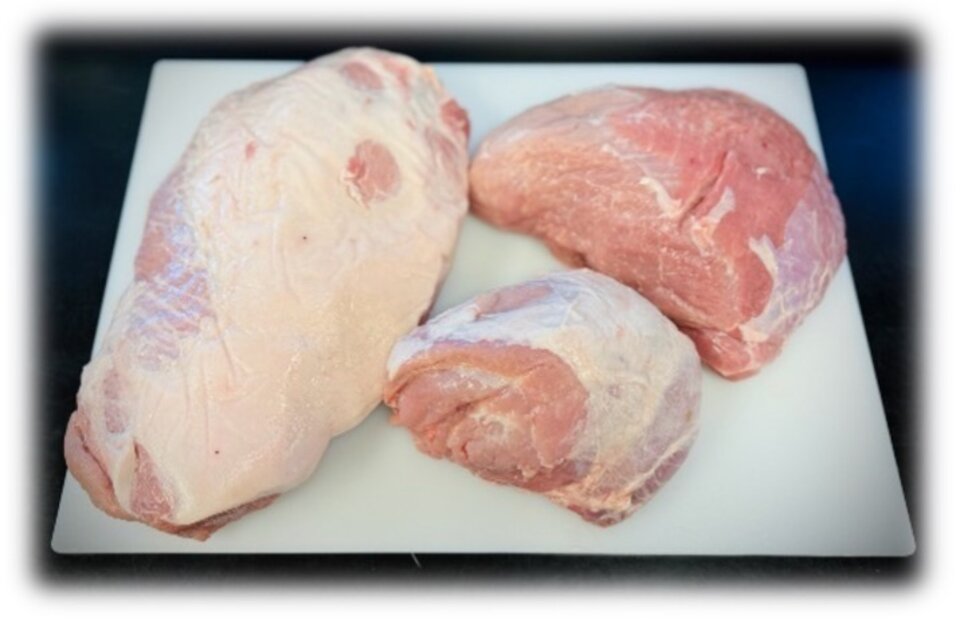
Photo: Illustrates the main muscles that make up a ham; outside (A), inside (B), and knuckle (C).
Preparing fresh ham muscles can be really rather simple, because they are closely trimmed there is no need to trim or cut the product prior to cooking, simply apply your favorite seasoning blend which could be as simple as salt and pepper, or explore different seasoning profiles such as Italian, BBQ, or even a citrus marinade. Regardless of the cookery method you choose (oven, grill, smoker etc.) the product should be cooked at a mild temperature with some moisture added to the pan or sprayed on the product. While temperatures and times can vary between the oven and slow smoker, a good benchmark cooking for pork roast is 325°F for 25 minutes per pound. The final internal temperature of pork should reach 145°F, however, the product will continue to grain 3- 5°F while resting. Therefore, removing the product from heat at 140-142°F and allowing it to rest for approximately 10 minutes before slicing will ensure a safe and juicy product. Slice product to ¼ inch thickness and serve.
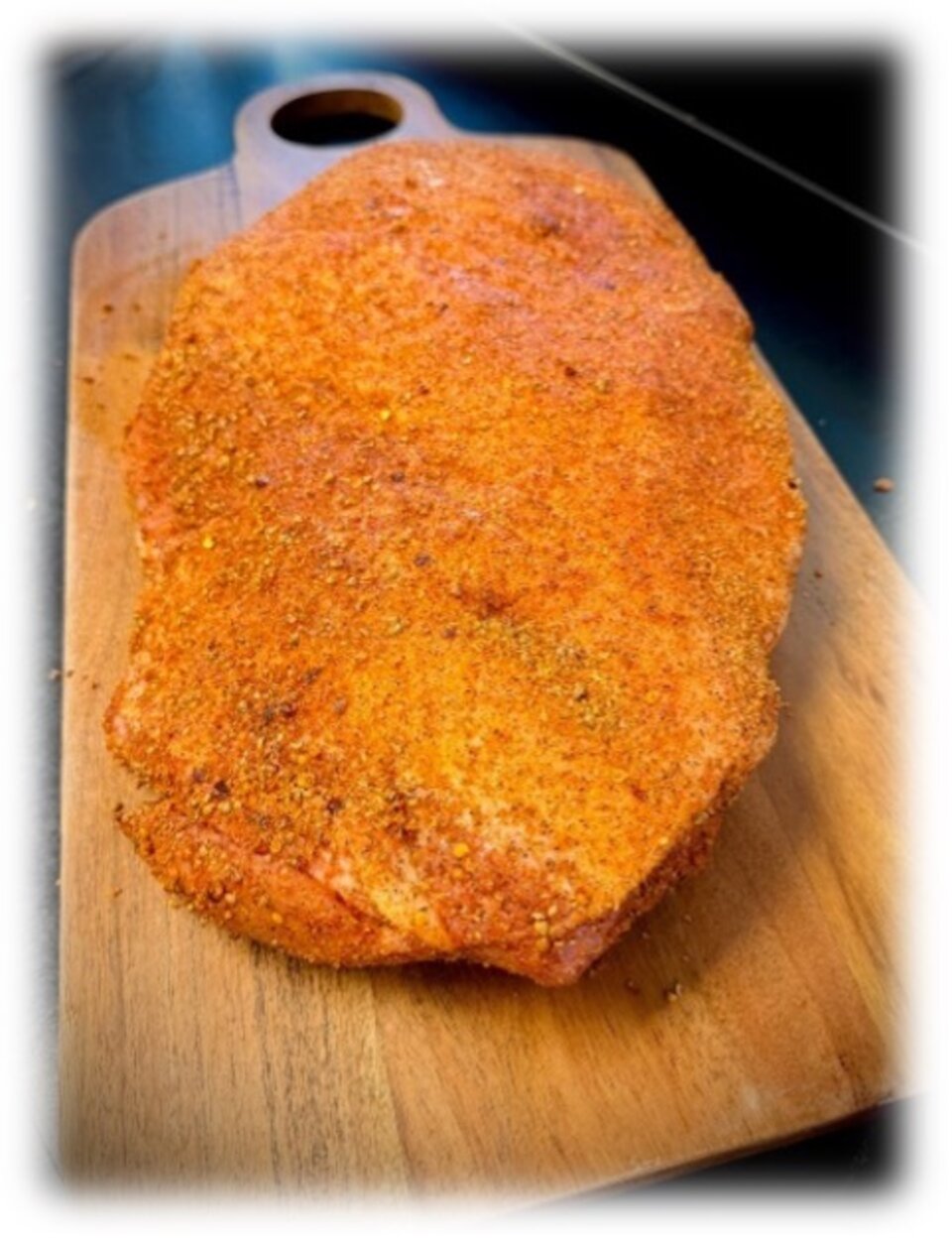
Photo: BBQ seasoned fresh pork outside ham muscle.
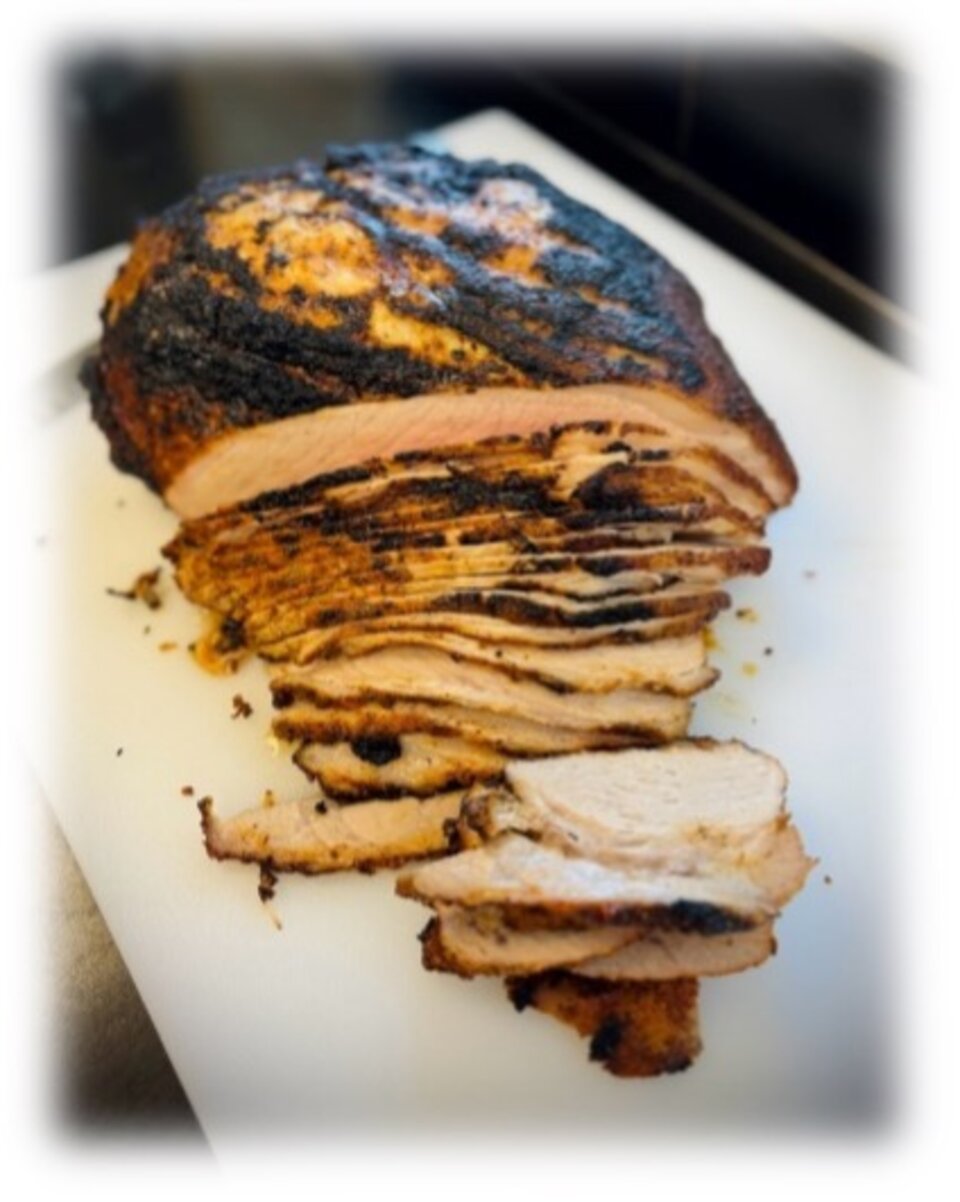
Photo: Grilled and sliced fresh pork outside.
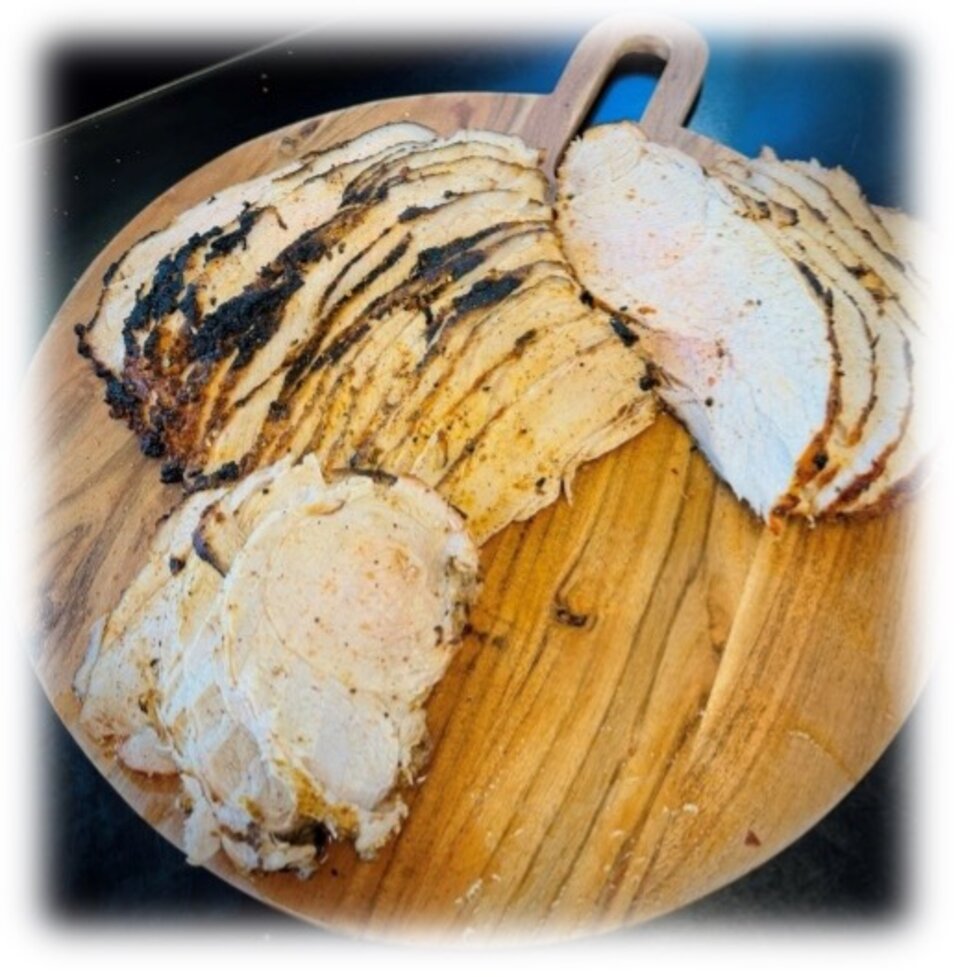
Photo: Grilled and sliced fresh knuckle (left), outside (center), and inside (right).